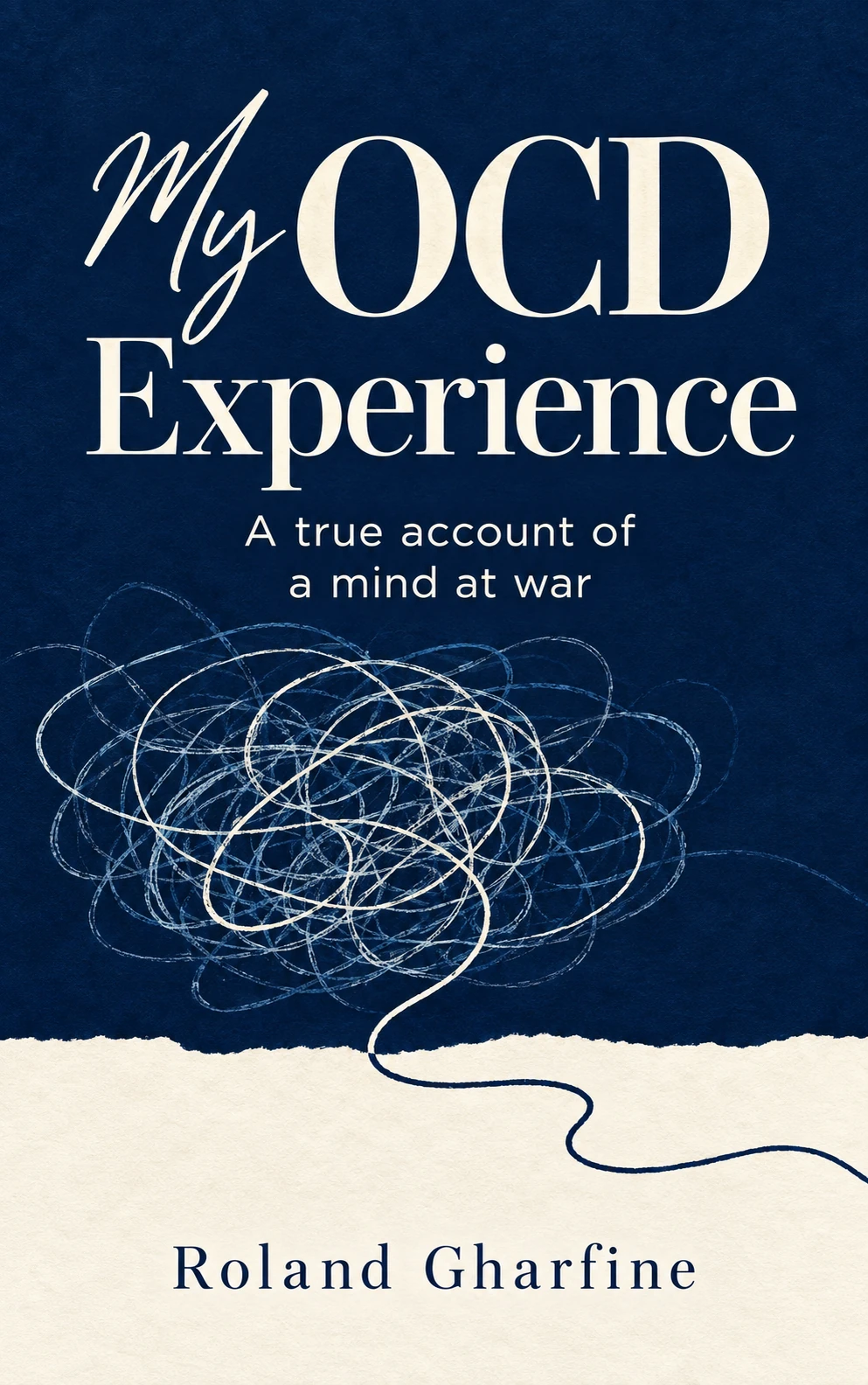
What you'll find inside
- Scenes, not lectures. Moments from childhood, relationships, work, and recovery when OCD wasn't just a diagnosis but a constant companion in the mind.
- Obsessions and compulsions, named. Not to sensationalise them, but to show how ordinary and how terrifying they can be at the same time.
- Shame and humour, side by side. Because sometimes the only way to survive your own mind is to laugh at how dramatically it misreads the world. Besides, who doesn't love some (self-proclaimed) brilliant comedy?
- Moments of hope. A little bit of joy, a little bit of accomplishment. Therapy (yes, the T-word, sorry) that helped, people who understood, and the slow, stubborn work of building a life that isn't ruled by fear.
A short preview
From Chapter Six (abridged)
There I was on this random school night, attempting to go to sleep. I slept with a night light, I was terrified of the dark and always imagined some horrors hiding in the shadows. Not uncommon for a child I suppose. My night light was a little house that looked like it was drawn straight out of a winter wonderland, with a Christmas-y green roof covered by patches of snow. Out of its little windows, the light inside spilled into the whole bedroom in a warm, comforting shade of orange.
The first time I realised my thoughts were not behaving like other people's thoughts, was that ordinary school night, with that ordinary night light. I couldn't bring myself to stop staring at the little windows, and I couldn't explain why but my mind kept insisting that I focus right on them, and citing the Lord's prayer in my mind. I prayed and prayed, and prayed again, until I had cited the famous few lines twenty times over, and it still didn't feel enough for some reason my young mind could not fully process.
It's time to sleep, I thought to myself, and finally called it quits after about fourty repetitions. This would turn into a nightly routine, and that night would mark the beginning of it all.
A note on safety
This book includes honest descriptions of intrusive thoughts and anxiety. It is meant to be validating, not triggering. If you know that certain topics are hard for you, it's okay to skip sections, read slowly, or close the book when you need to.
If you are in immediate distress or thinking about harming yourself, please contact a local crisis line, emergency services, or a mental health professional. You deserve support beyond these pages.